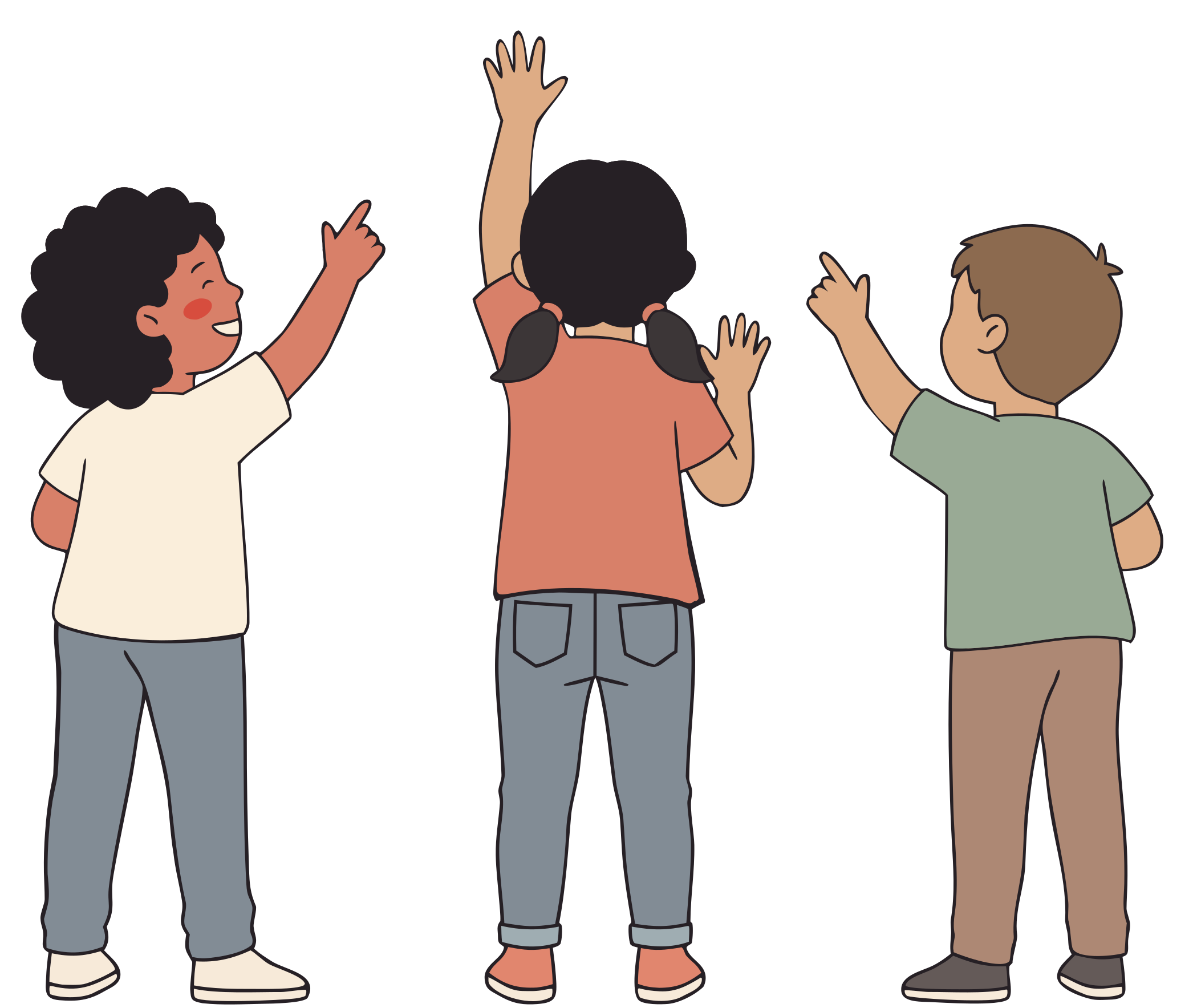
Three children seen from behind, arms up, hands pressed flat against a huge black play surface. Running behind their arms is the app's own world, as one looping camera journey through its three altitudes: the Universe is an album, a galaxy inside it is one song, and a solar system inside that galaxy is one voice track — one instrument in the song, all of them sharing one clock. The journey starts pulled all the way out at the Universe, a ring holding three galaxies, silent and frozen. It descends into one galaxy — one song — where three solar systems, its three voice tracks, sit at exactly one 3.5th the galaxy's own size and turn their clockwise arms at once at three different speeds on that shared clock: the fastest completes four turns for every one the slowest makes. It descends into the first voice track, where a hub bowl of brush marbles sits inside a ring scattered with coloured notes, and that track's arm sweeps half a turn, pulsing each note it crosses, while the other two keep turning unseen and never pause. It pulls back to the song — every arm exactly where the shared clock would have left it, nothing reset — then descends into a second, different voice track: different notes, a different instrument's colour on its hub, a faster tempo. It pulls back to the song once more, out to the silent album, and repeats. The children's hands and fingers stay in front of all of it, so a ring is interrupted wherever an arm crosses it.

Tap anywhere. Make Music.

A music-making game for kids and grown-ups, on iPhone and iPad. Touch the black and you're playing — every colour you land is a note, and the arm sweeps round to play them back.

Get the App

One touch is the whole lesson.

Nothing to read, no up or down, no wrong way to hold it — and underneath, a whole new solar system of imagination, and a whole new kind of instrument.
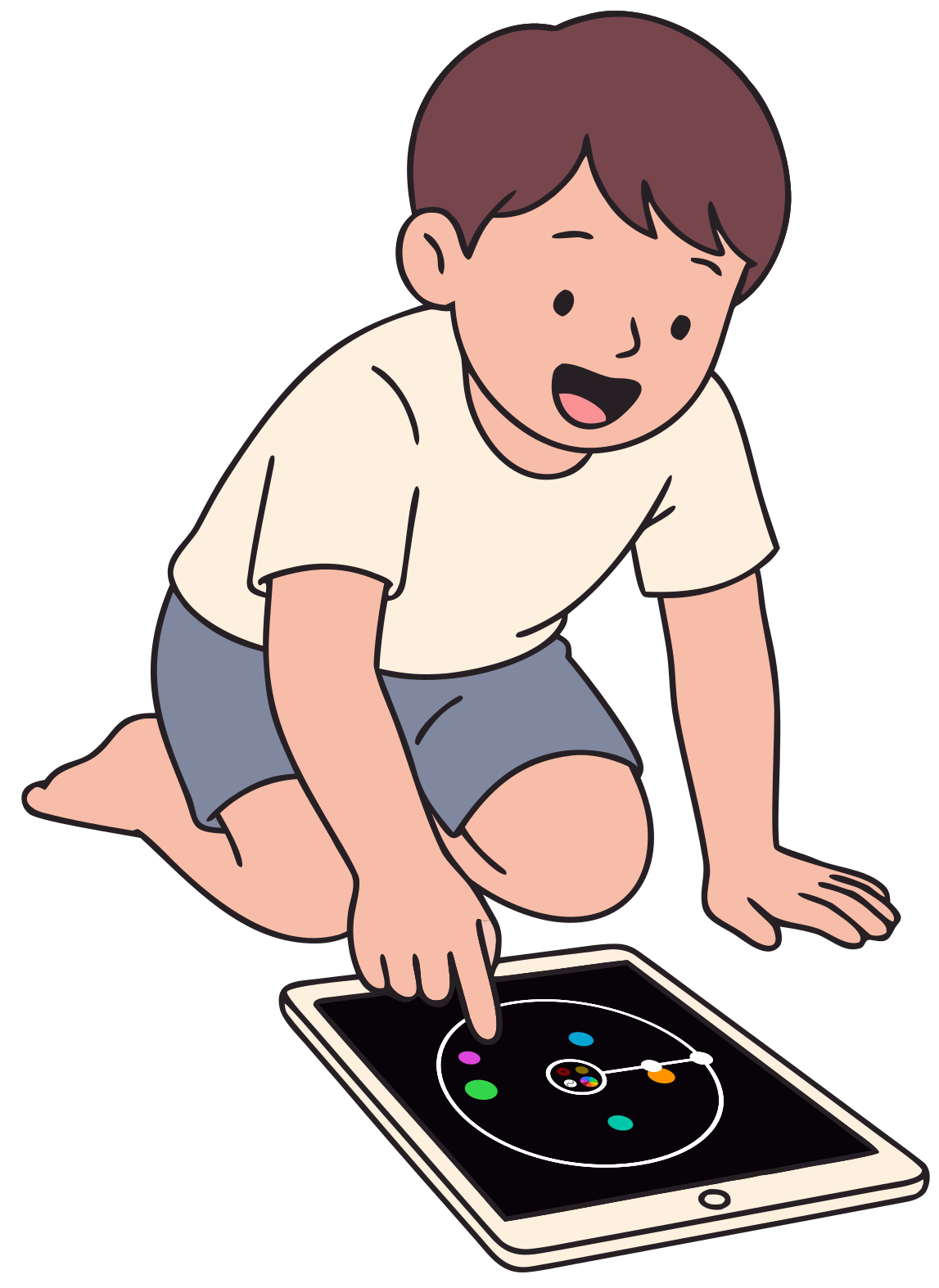
A small child kneeling alone over an iPad on the floor, touching the black screen with one finger. A single yellow circle has appeared under the fingertip — the one note that touch just made. Around it, the otherwise empty play surface: the white ring, the black hub with its four marbles at the centre, and the sweep arm parked clear of the new note, its tempo weight at the midpoint and its phase knob out on the ring.

Mash it. It still sounds right.

Random creation draws from a curated pentatonic set — so mashing never sounds bad. And push past a limit and it shrugs: there is no error dialog anywhere in Touchtone, just one soft pulse, and then it's your turn again.
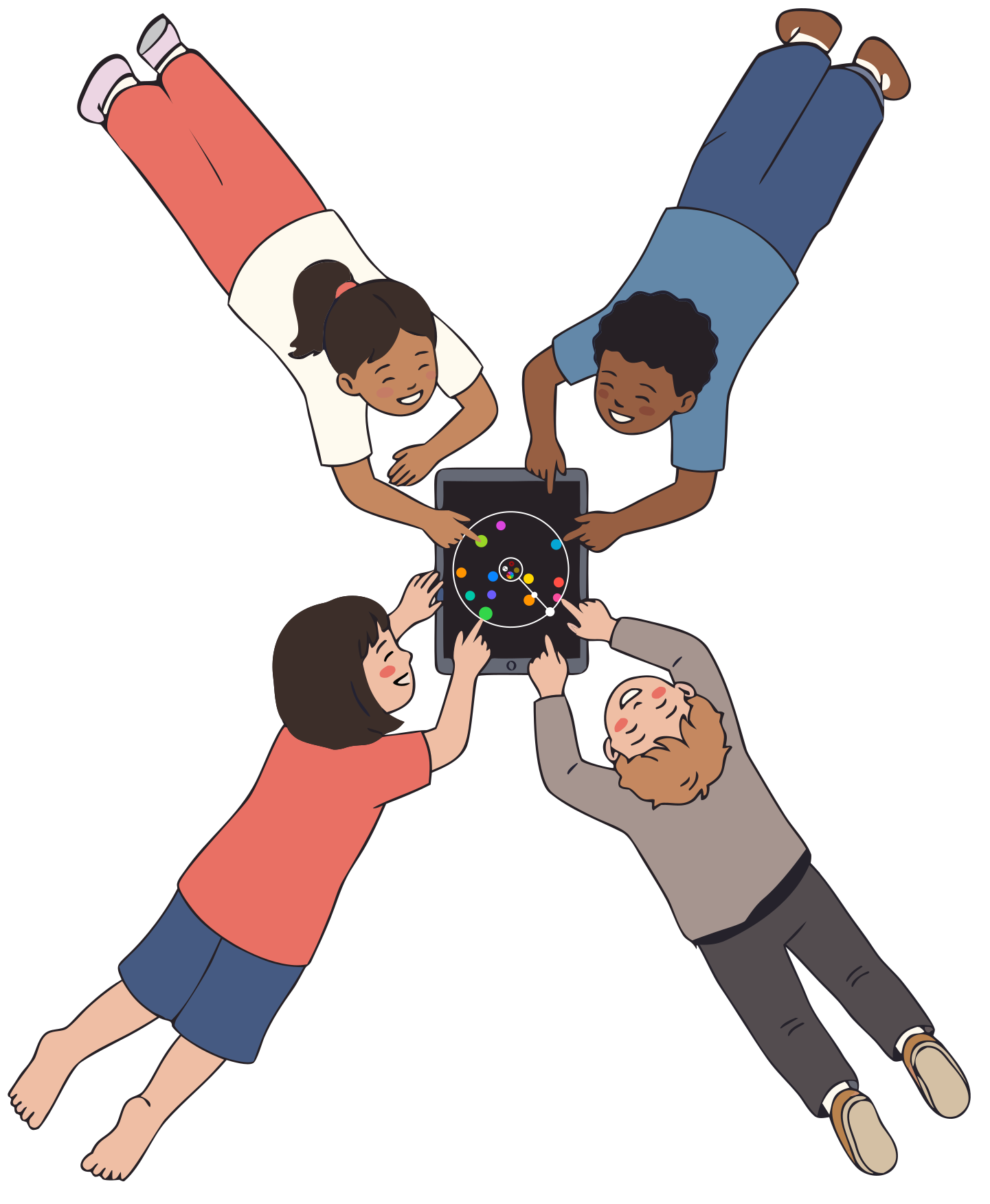
Seen from directly above: four children lying around one iPad held portrait, each at a different orientation — one at the top, one at the bottom, one along each side — all reaching in to touch its black screen at once. On the screen is Touchtone's Solar view: a white ring with ten coloured notes inside it, a black hub disc rimmed in white holding the four marbles, and the sweep arm running from the hub out to the ring, its tempo weight riding the midpoint and its phase knob at the tip.

Five quick facts, all verified.

No ads. No in-app purchases. No accounts — nothing to sign up for. Microphone: only the vinyl brush uses it, and a take never leaves your device. The whole universe lives in the app — and never leaves it.

Get the App Questions? →

Requires iOS 17 or newer

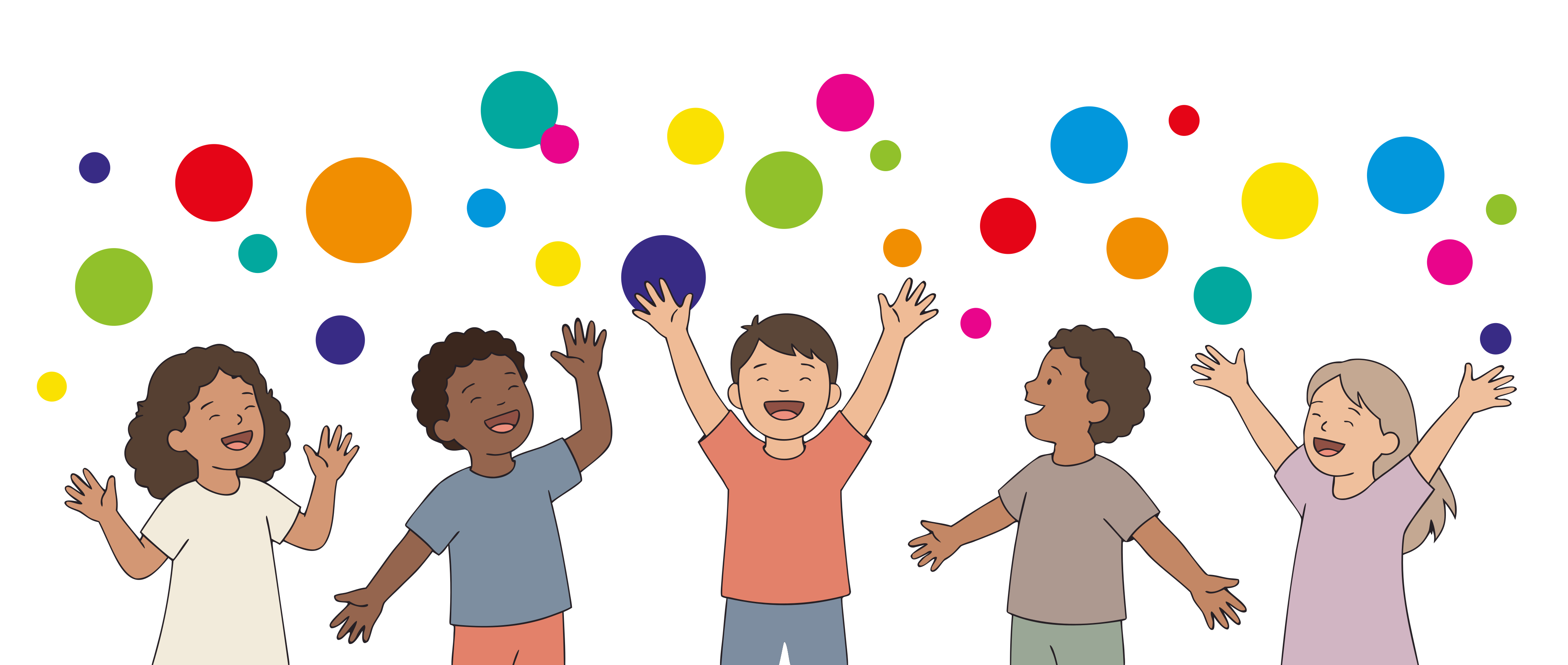
Five laughing children stand in a row on a warm cream ground, arms thrown up or spread wide, cut off by the bottom edge of the frame mid-leg. Five different skin tones, dark and fair hair, tops in cream, slate blue, coral, warm grey and lilac; every figure is drawn in the same dark red-brown outline. The air above and between them is full of flat coloured circles of many sizes — twenty-eight in all, in red, orange, yellow, green, teal, blue, magenta and deep indigo — like notes just released from their fingertips. A big indigo one hangs at the fingertips of the middle child's raised hand.